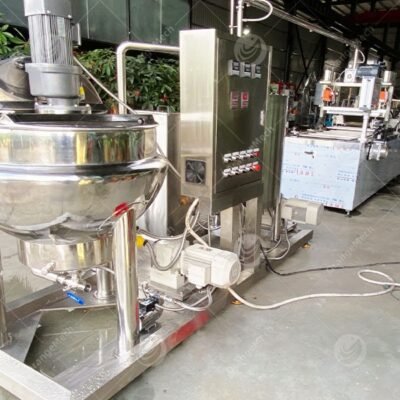

In the pasta processing industry, dough mixing is the basic and core process, which directly determines the gluten, taste and finished product quality of dough. Traditional manual dough mixing has low efficiency, uneven kneading strength and poor hygiene, and it is difficult to meet the needs of large-scale production. As the core equipment of automatic pasta processing, a dough mixer can accurately replace manual work to complete the mixing and kneading of flour, water and auxiliary materials, and it is an indispensable core equipment for modern pasta production. In order to standardize the use of equipment, clarify the principle and use of equipment, prolong the service life of equipment, and ensure the processing quality and production safety of pasta, this paper will provide professional reference.
一. What Is a Dough Mixer?
The dough mixer is a kind of food machinery and equipment specialized in mixing flour, water, salt, yeast and other raw materials. It integrates the functions of stirring, kneading and homogenizing, and is a standardized and mechanized dough kneading tool. The equipment is mainly composed of a mixing bowl, spiral mixing hook, transmission system, electric control system, machine frame and other core components. The whole equipment is made of food-grade stainless steel, which meets the hygiene standards of food production. According to the usage scenarios, it can be divided into household small-sized dough mixer, commercial two-speed dough mixer and industrial automatic dough mixer. Different models can meet the needs of pasta processing with different yields, completely solve the industrial pain points of uneven manual dough mixing, uneven dough dryness and low efficiency, and widely adapt to various pre-processing procedures of pasta.
二. The Working Principle of the Dough Mixer
Relying on the mechanical transmission structure, the dough mixer simulates the push-pull, folding and pressing actions of manual kneading, and automatically completes the complete dough kneading process to realize the full hydration of flour and gluten forming. After the equipment is started, the motor outputs stable power through the reduction transmission system, driving the spiral mixing hook to rotate at a uniform speed, and some models work together with a mixing bowl that rotates in the opposite direction, forming a differential mixing structure.
三. Structure Introduction of the Dough Mixer
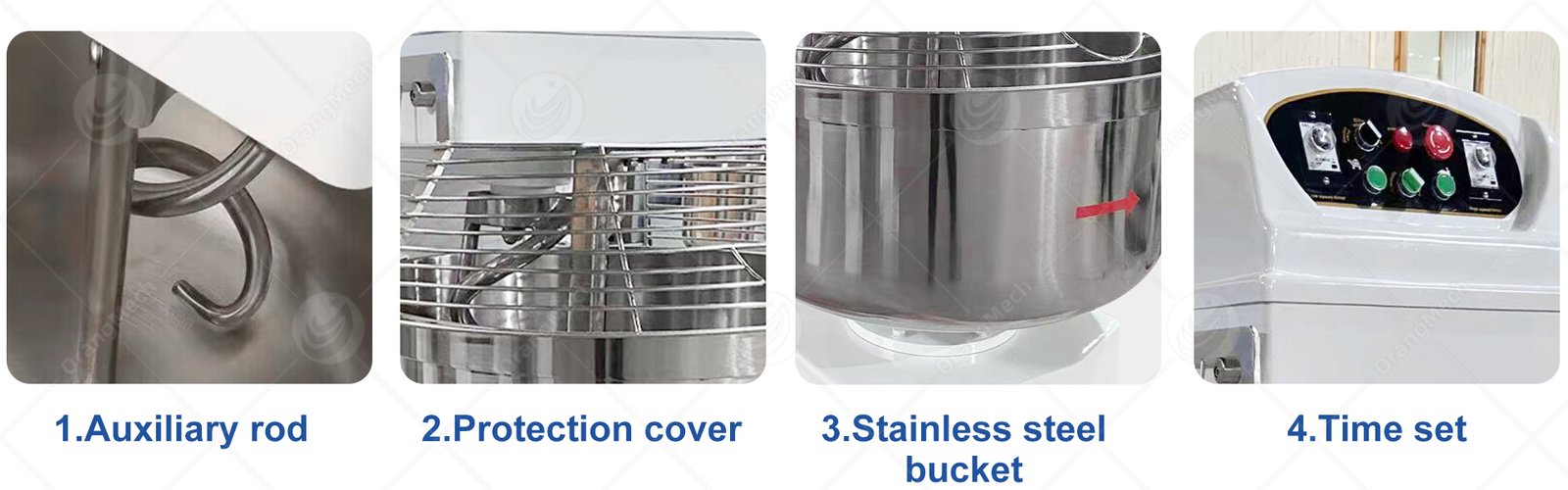
A dough mixer is a special dough kneading tool for pasta processing, which can efficiently complete the standardized dough kneading operation. The material contact parts of the whole machine are made of food-grade 304 stainless steel, which is hygienic, wear-resistant and easy to clean. It is mainly composed of six core structures:
- The stirring mechanism takes the spiral stirring hook as the core, simulates the manual kneading action, fully activates the gluten, and ensures that the dough is uniform and elastic;
- The dough mixing cylinder is divided into vertical and horizontal tilting types, which are suitable for small and medium-sized production and industrial mass operation respectively, and the inner wall is smooth and not easy to stick to dough;
- The transmission system consists of a motor, reducer, belt, bearing, etc., which can realize high-speed and low-speed process switching, with sufficient torque and stable operation;
- The fuselage frame welded with thickened steel plate has stable bearing, shock absorption and noise reduction, and can stabilize the equipment operation with adjustable anchor feet;
- The electronic control system integrates the functions of start-stop, speed regulation and overload protection;
- The supporting safety protection net and limit switch can stop the machine when the safety net is opened, avoid potential safety hazards in all directions, and the overall structure of the equipment is compact, stable and durable, which is suitable for various domestic, commercial and industrial production scenarios.
Knowing the structure of a dough mixer is an important part of buying a machine, which is convenient for you to analyze the specific influence of each structure of the machine on your dough. If you want to know more about which type of dough mixer is suitable for you, contact Orange Mech.
四. Daily Maintenance of the Dough Mixer
Standardized daily maintenance is the key to ensure the stable operation of the dough mixer, prolong the service life of the equipment and ensure the hygiene of food production, and it is necessary to strictly follow the four maintenance criteria of cleaning, lubrication, overhaul and storage.
Idle storage and maintenance: When the equipment is idle for a long time, it needs to be thoroughly cleaned and dried, placed in a dry, ventilated and corrosion-free environment, well protected against dust, and turned on at regular intervals for no-load operation to prevent parts from rusting and circuits from being damp and aging.
Daily cleaning and maintenance: After each use, it is necessary to clean up the residual dough and crumbs on the surface of the mixing bowl and the mixing hook in time to avoid the dough drying and sticking and the growth of bacteria. When cleaning, it is forbidden to use sharp instruments to scrape the inner wall of the equipment and the mixing parts to prevent scratching the stainless steel surface; it is forbidden to directly flush the motor and electric control box with water to avoid short circuits caused by water ingress. Wipe the appearance of the fuselage with a wet cloth to keep the equipment clean and dry.
Regular lubrication and maintenance: Food-grade lubricants should be added to the running parts such as transmission bearings, gears and chains of the equipment regularly, and the lubrication status should be checked during each shift. Comprehensive lubrication should be completed once a week, so as to reduce the wear and tear of mechanical operation, avoid abnormal noise, jamming and weak transmission of the equipment, and ensure smooth and stable stirring and kneading actions.
Routine equipment maintenance: Check the integrity of equipment lines, switches and drive belts before starting the machine every day to see whether the mixing parts are firmly fixed and whether the machine body is stable; regularly check the wear and tear of spare parts, replace aging and damaged spare parts in time, put an end to running with faulty components and avoid hidden dangers in production safety.
五. Summary
To sum up, the dough mixer, as the core pasta processing equipment, has replaced traditional manual dough mixing by virtue of its scientific mechanical dough kneading principle, extensive application scenarios and efficient processing capacity, and has realized the mechanization and standardization of dough mixing. In daily use, strictly following the equipment operation specifications and maintenance criteria, and doing a good job in cleaning, lubrication and maintenance, can not only ensure the long-term stable operation of the equipment and reduce the failure probability, but also continuously produce high-quality dough, meet the technological requirements of various pasta production processes, and provide solid equipment support for household pasta production, commercial production and large-scale industrial pasta production. If you have any questions during the use of the dough mixer,please contact OrangeMech in time. As a professional dough mixer manufacturer, OrangeMech will provide professional answers.