
Across the snack, bakery, and confectionery production and consumption sectors, chocolate coating does far more than elevate a product’s flavor profile and visual appeal—it is also a critical process step that directly governs product stability and shelf life. OrangeMech’s chocolate coating production line integrates the full core workflow of melting, tempering, curtain enrobing, and cooling into a single cohesive system, boasting precision closed-loop parameter control, uninterrupted stable operation, and high-yield production capacity. How do you make chocolate coating? In this article, we will provide a detailed breakdown of OrangeMech’s proprietary chocolate coating production line to support you in achieving high-efficiency, stable, and premium-grade chocolate coating manufacturing.
一. What is a chocolate coating machine?
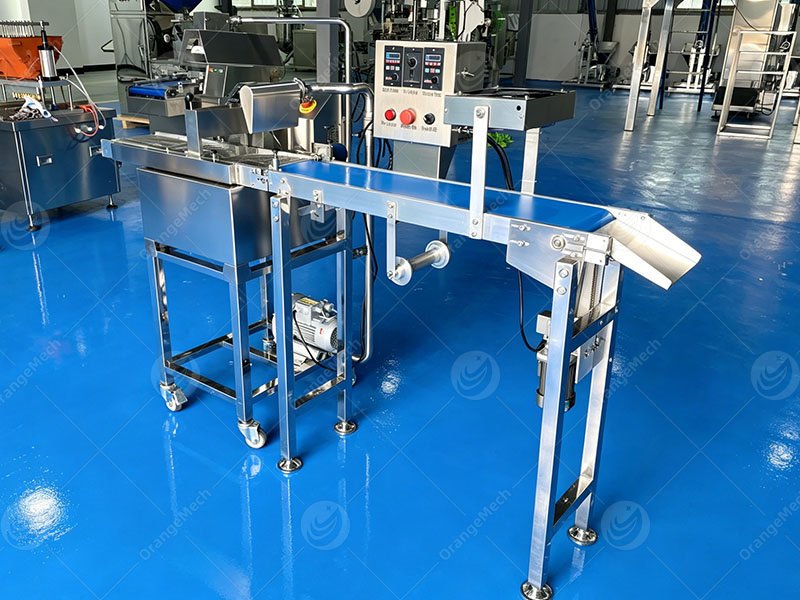
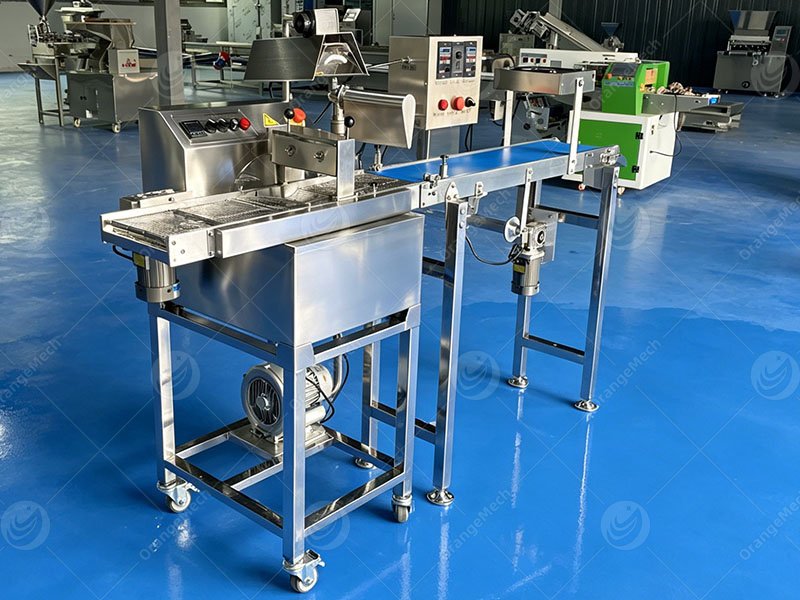
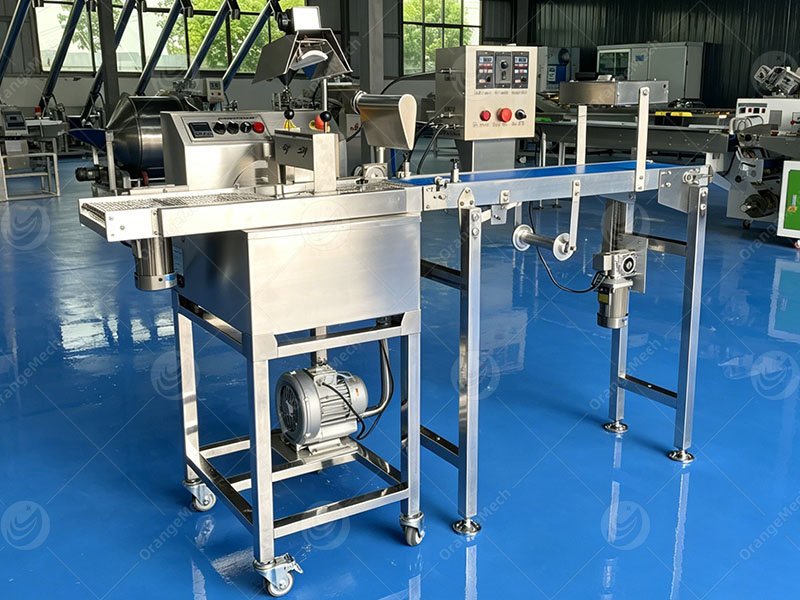
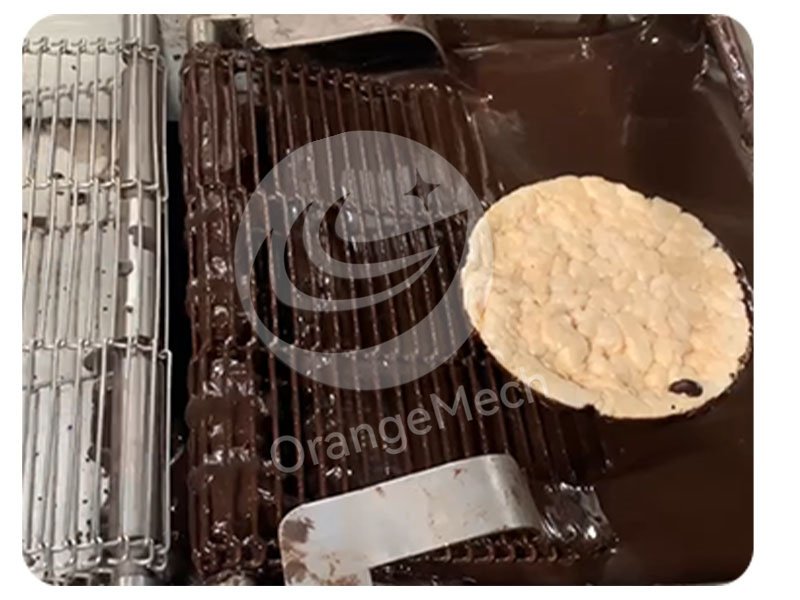
The chocolate coating process involves applying a layer of chocolate onto the surfaces of products, including biscuits, wafers, freeze-dried fruits, and nuts. Through automated chocolate coating lines, standardized coating processing is realized, effectively improving product taste and added value. After being melted and tempered, the chocolate raw material is evenly poured over the materials. An air knife is then used to remove excess chocolate liquor from the surface before the products enter the cooling stage.
二. The core structure and working principle of the chocolate-coated wire
1.Feedstock melting system
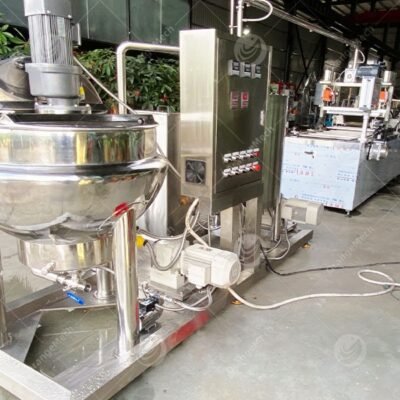
This process converts solid chocolate into liquid slurry to ensure a stable raw material supply for subsequent procedures. The system mainly consists of a melting tank, a ball mill and a heat preservation cylinder.The melting tank adopts a double-layer water-insulated indirect heating structure to prevent scorching and fat separation caused by direct heating. It is equipped with a low-speed anchor agitator with adjustable rotating speed to avoid air bubbles generated by excessive stirring.The heat preservation mixing tank receives the discharge from the melting cylinder, maintains a constant holding temperature to prevent the slurry from solidifying due to cooling, and is equipped with a liquid level display and automatic feeding function.The delivery pump adopts variable frequency control to realize quantitative slurry conveying. A duplex filter removes agglomerates and impurities in the slurry, preventing clogging of the downstream enrobing module and ensuring the purity of the chocolate slurry.
2.Precise temperature control system
The tempering system serves as the core processing unit of the chocolate coating line, which directly determines the appearance and texture of finished products. It mainly comprises a tempering machine, temperature control chamber, temperature sensors, circulating stirring impellers and a tempering control cabinet.The tempering machine adopts a three-stage temperature control structure, including a pre-cooling zone, crystallization zone and re-heating zone. Equipped with built-in temperature sensors, it features high precision in temperature control and enables real-time monitoring of the slurry temperature. The internal stirring impellers rotate at a low speed to assist the slurry in cooling evenly and forming stable crystal forms.Slurry that has passed tempering is delivered to the coating process, while substandard slurry is automatically recycled for re-tempering.
3.Host coating system
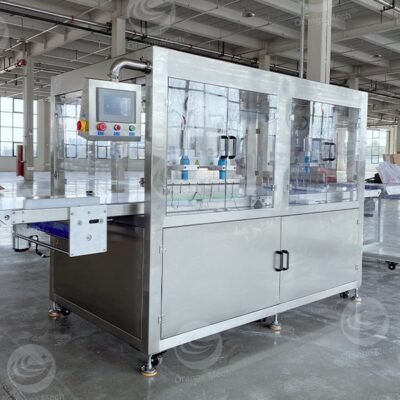
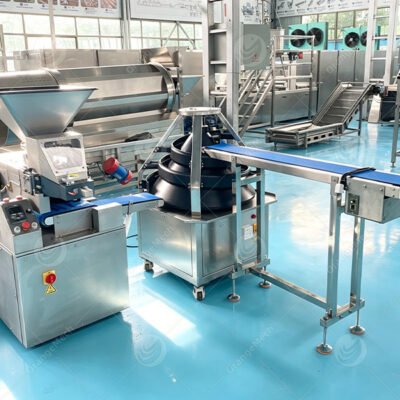
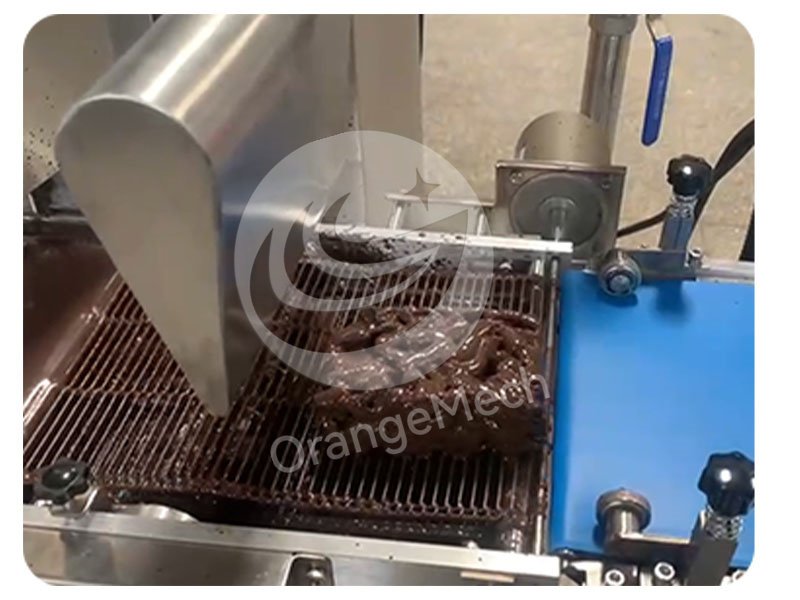
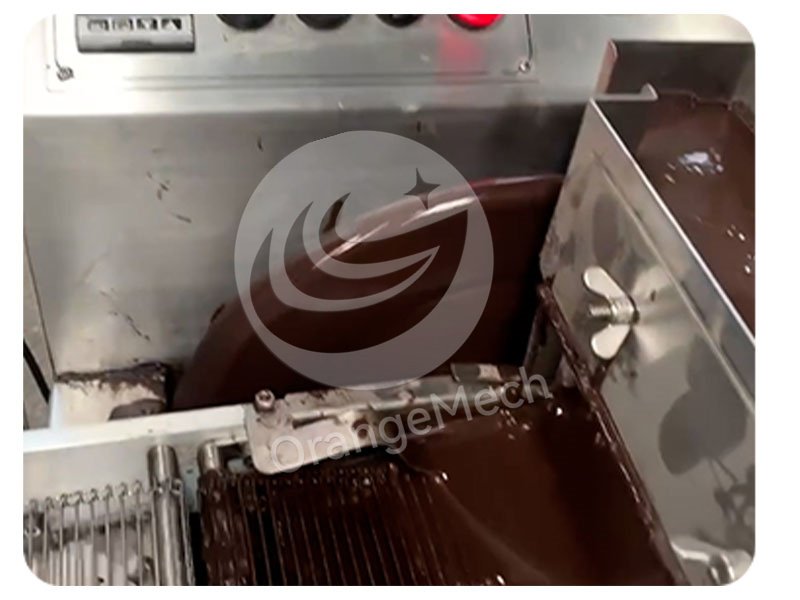
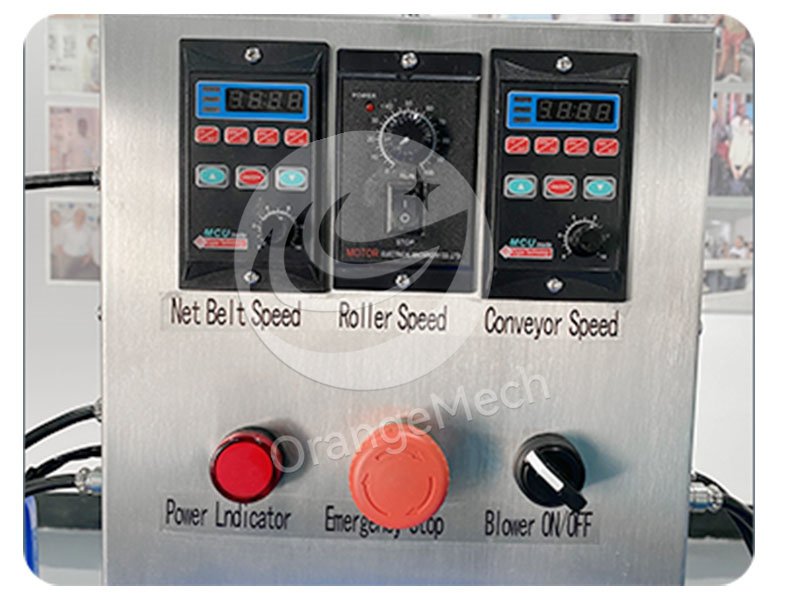
The main coating system acts as the execution unit of the chocolate coating process, responsible for automatic enrobing of products and precise control over coating thickness. It mainly consists of a conveyor belt, enrobing unit, air knife device, blade adjusting mechanism, cooling frame and protective cover.The conveyor belt is made of food-grade PU material, which is non-toxic, odorless, wear-resistant and easy to clean. Its width is customizable, driven by a variable-frequency motor with adjustable speed to suit coating durations for different products.The enrobing unit is equipped with a long and narrow discharge outlet, forming a continuous, uniform and uninterrupted chocolate waterfall. The conveyor belt is depressed by pressing sheets so that the bottom of products can be immersed in chocolate solution, ensuring full and complete coverage without missing any areas.The air knife device blows high-intensity airflow using compressed air to remove excess chocolate from the product surface.
4. Cooling and Stabilization System
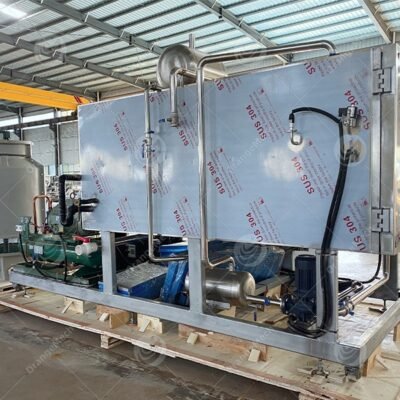
The cooling and setting system functions as the rear forming unit of the chocolate coating line, which quickly and evenly cools and solidifies chocolate coated products to ensure coating hardness and adhesion. It consists of an enclosed cooling tunnel, circulating refrigeration unit, gradient air duct, guide fans and discharge transition conveyor belt.The cooling tunnel adopts a sectional gradient temperature control design, which is divided into an inlet pre heating zone, middle strong cooling zone and outlet rewarming zone, so as to prevent coating cracking caused by sudden cooling of products.It is equipped with internal circulating air ducts that provide gentle and uniform wind speed without direct blowing onto products, avoiding deformation of the chocolate coating.The refrigeration unit can be air cooled or water cooled, and its temperature can be adjusted according to different types of chocolate.
三. The process of making chocolate coating
1. Preparation of raw materials: Chocolate melting pot
The melting tank serves as the fundamental preheating and melting equipment at the front end of the chocolate coating line. Its primary function is to slowly and uniformly heat and melt bulk and granular chocolate raw materials in a water bath heating manner, transforming solid chocolate into liquid form with excellent flowability while maintaining stable heat preservation. This ensures a continuous and homogeneous feed supply for the downstream tempering machine. By adopting gentle heating, the melting tank effectively prevents local overheating, scorching, and fat separation of chocolate. It is also equipped with a low-speed stirring function to further maintain material uniformity.
2. Precise grinding fineness: Chocolate ball mill
First, a chocolate ball mill is used to grind solid particles in the melted chocolate slurry to a micron-level fineness. Ultra-fine pulverization is achieved through high-speed shearing and friction of steel balls inside the cylinder, ensuring a smooth and delicate taste of the chocolate, which lays a solid foundation for subsequent chocolate coating operations.
3. Stable material temperature maintenance: Chocolate insulation tank
Upon completion of the fine grinding process, the processed chocolate liquor is transferred into an insulated storage tank for retention. By means of precise tank temperature regulation and non-stop gentle mixing, the chocolate slurry maintains stable flow characteristics and uniform texture throughout the storage period. This tank is fitted with a water-circulation jacket heating system, which holds the chocolate at its ideal liquid-phase working temperature to prevent solidification, unwanted crystallization, and fat separation. Meanwhile, low-speed agitation stops sugar granules and cocoa solid particles from sedimentation, ensuring full homogeneity of the material, and delivering a continuous, temperature-controlled, uniformly consistent chocolate feedstock for the downstream coating procedure.
4. Delicate taste-making technique: Temperature control of the chocolate solution
The tempering machine applies a precise temperature-control program to perform accurate cooling, heat preservation, and rewarming on the heated molten chocolate slurry. For pure cocoa butter chocolate, the temperature is gradually lowered to 27–29°C to form stable crystal nuclei. After holding the temperature to facilitate crystal growth, it is rewarmed to 31–32°C. This process helps chocolate develop a stable crystalline structure, preventing issues such as blooming, discoloration, and coating detachment during later cooling. Only properly tempered chocolate slurry is allowed to be transferred to the main coating machine for production.
5. Continuous coating conveyance: Automated coating operation
The tempered chocolate solution is lifted by the rotating disc inside the melting tank into the coating hopper, forming a continuous and uniform “enrobing waterfall” under gravity. Products to be coated pass through the coating zone at a constant speed on the conveyor belt, achieving full surface coverage. An air knife then precisely removes excess slurry from the surface. The dripping and scraped-off slurry falls back into the melting tank below for recycling, reducing raw material waste and cutting production costs.
6.Output of the finished product: Cooling and shaping stage
Products that have completed the coating process enter the cooling tunnel, where a continuous stream of circulated chilled air inside the tunnel delivers consistent, uniform cooling to the materials. This process allows the chocolate coating on the product surface to undergo a full phase transition from a liquid to a solid state, adhering firmly to the substrate surface, and ultimately culminates in the discharge of qualified finished products.
四. Core Parameters of Chocolate Coating Machine
Below are all the specifications of the chocolate coating line, listed item by item from model to price, giving you a more in-depth understanding of the machine. You may select the appropriate configuration for your chocolate coating machine, with a wide range of output capacities available for your choice.
| Model | YMTC08 | YMTC15 | YMTC30 | YMT60 | 2.5-6M cooling tunnel |
| Voltage | 110V/220V | 110V/220V | 220V/380V | 220V/380V | 380V |
| Power | 1.4 kW | 2 kW | 2 kW | 3 kW | 28 kW |
| Yield | 5 kg/h | 15 kg/h | 30 kg/h | 60 kg/h | – |
| Boundary dimension | 1997*570*1350mm | 2200*640*1400mm | 3300*480*1480mm | 4500*650*1480mm | 18155*600*2177mm |
| Suttle | 140 kg | 160 kg | 180 kg | 200 kg | 3t |
五. Daily maintenance of the chocolate coating machine
1. Preparation before startup
First, check that the power cord is properly connected and all wiring between components is correctly installed. Position the coating conveyor mesh belt so that products can smoothly enter the cooling tunnel. Inspect the mesh belt for any leftover material to avoid contamination. Make sure the melting tank is clean and free of residual chocolate. Then start the machine for preheating and verify that the temperature display on the melting tank is functioning normally.
2. Maintenance during operation
During machine operation, staff should perform regular inspections to ensure normal feeding from the chocolate melting pot and even slurry distribution in the waterfall coating area. The temperature of the melting tank must be accurately controlled within an appropriate range. Excessively high or low temperatures will directly affect the taste and appearance quality of the finished products. It is also necessary to verify that the air knife can uniformly strip excess chocolate slurry off the surface of passing products and fine-tune the installation height of the air knife based on the actual slurry removal effect. Meanwhile, the cooling performance of the chocolate coating shall be evaluated by observing finished products discharged from the outlet end of the cooling tunnel, with prompt adjustments made to the tunnel’s operating temperature accordingly.
3. Maintenance after powering off
Once the equipment is shut down, a comprehensive cleaning procedure must be carried out on the entire unit to prevent cross-contamination from residual materials and extend the operational lifespan of the machine. First, cut off the main power supply and turn off the air pump, then wait until the equipment has cooled down completely to ambient temperature. Dismantle removable components, including the mesh belt, feeding hopper, and other detachable parts; rinse away all remaining chocolate residue with warm water; and wipe them thoroughly with a lint-free dry cloth after cleaning to avoid residual moisture that could lead to component rusting. Next, wipe down the full surface of the conveyor belt with warm water to eliminate grease stains and leftover chocolate deposits. Finally, conduct a complete inspection of the equipment’s overall condition, and store the unit in a dry, well-ventilated environment to prevent damage from moisture ingress and dust contamination.
六. Summary
Chocolate-coated products are immensely popular with consumers across the globe and hold vast, promising market potential. At Orange Mech, we are committed to building the finest, best-fit machinery solutions for our valued customers. The foregoing content constitutes the complete technical guide for this chocolate coating line. Now you know how to make chocolate coating. and we are confident that you have now developed a full, solid understanding of the entire production system. We are more than happy to provide you with exceptional products and thoughtful, seamless after-sales support to help you achieve steady and sustainable progress in your business endeavors.