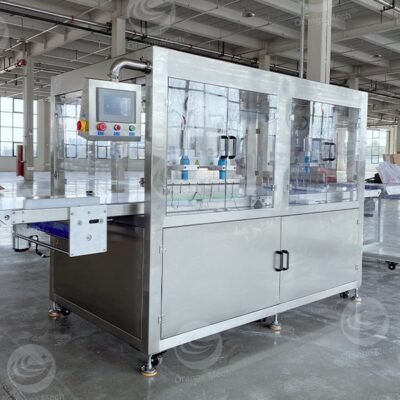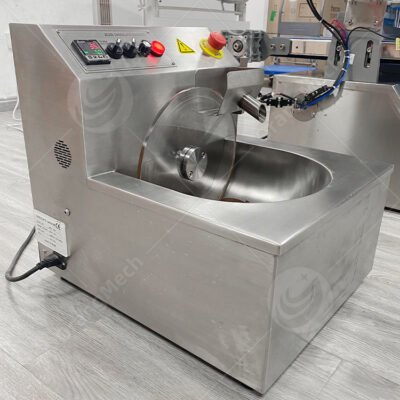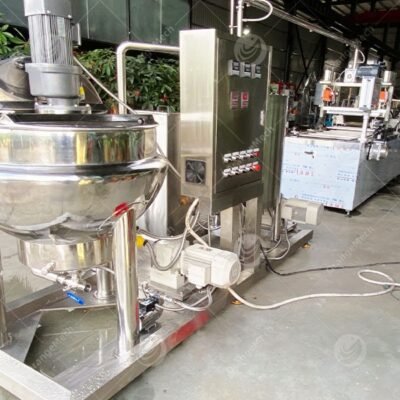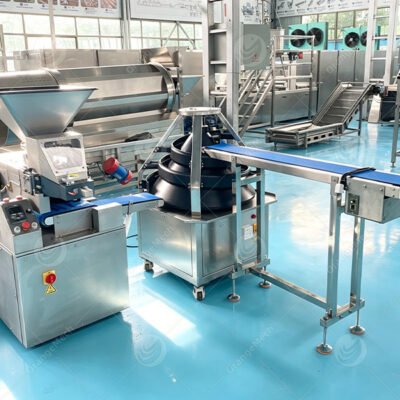

Soap is an indispensable daily commodity for every household. Among various soap products, laundry soap has secured a prominent position in the daily chemical market by virtue of its core advantages: large specifications at a low price, long-lasting durability, and powerful cleaning capacity. Against the background of continuously improving living standards in modern society, laundry soap has seen a growing frequency of use, accompanied by a surging and ever-increasing market demand. For manufacturers in this sector, selecting a highly efficient, premium-quality, and cost-effective laundry soap production line has become the core determinant of their business profitability. This paper elaborates on the key technical points of the production technology of soap-making machines in China from multiple perspectives, aiming to provide professional and practical reference for enterprises in equipment selection and on-site process implementation.
一. What is a laundry soap production line?
The laundry soap production line, which uses soap base, fragrances, and other auxiliary materials as feedstock, fulfills fully automated manufacturing of finished laundry soap through sequential processes: blending, refining, grinding, and vacuum extrusion into soap bars, followed by precision cutting, pattern stamping, and other downstream procedures. It is designed with a streamlined production flow, consistent batch-to-batch product quality, and fully customizable production capacity and formula configurations. Boasting full-process high automation and reliable operation stability, it supports flexible adjustment to adapt to diverse production capacity requirements and formula specifications and can efficiently manufacture laundry soap bars with consistent specifications and stable batch quality, fully satisfying the demands of industrial mass production.
二. Main Components of a Laundry Soap Production Line
1. Mixing blender
First, feed soap granules into the agitating blender for mixing processing. Colorants, fragrance compounds, antioxidants, and other functional additives can be dosed into the blender simultaneously to ensure the soap granules are thoroughly and uniformly blended while completing crushing, fine refining, and preliminary plasticization treatment, which lays a solid process foundation for the subsequent triple-roll milling, vacuum bar extrusion, precision cutting, and final forming operations.
2. Refining machine
The soap refining machine stands as the critical core unit that directly determines the final production quality within a laundry soap manufacturing line. Its primary function is to process the coarse soap stock discharged from the prior blending and mixing procedure through screw-driven extrusion, precision orifice plate shearing, and repeated shredding treatment. This process achieves fine homogenization, full densification, and thorough air pocket elimination of the soap material, resulting in a compact internal texture, glossy surface finish, and completely void-free internal structure, which lays a stable and optimal process foundation for the subsequent vacuum bar extrusion and precision guillotine cutting operations.
3. Three-roll grinder
The three-roll mill is a specialized, process-critical piece of equipment dedicated to the precision refining and homogeneous homogenization of soap base in soap manufacturing operations. It leverages three precision-matched, closely intermeshing rollers to apply high-pressure compaction, shear refining, and precision milling to the refined soap granules, reducing the material into an ultra-smooth, flake-form paste commonly known as “soap flakes.” Simultaneously, it achieves complete, uniform dispersion of functional additives, including fragrance compounds, colorants, and fillers, while eliminating residual solid particles and surface streaking defects within the material. The soap stock processed by this unit features a consistently sleek and refined texture, which directly elevates the tactile hand feel, lathering performance, and surface gloss of the final finished soap products.
4. Vacuum stripper machine
The vacuum extruder mainly performs three core functions: vacuum deaeration, high-pressure compaction, and continuous bar extrusion. It removes excess air from the refined and milled soap material inside the vacuum chamber to prevent air holes in the finished soap body. The loose soap mass is then highly compressed by a screw into a dense, compact billet, which is finally extruded through the die to form continuous, smooth, and uniform soap bars. The vacuum strip machine allows for adjustable strip production speed and outlet temperature, making it suitable for different production capacities and processes.
5. Cooling system
Since the soap extrudate directly discharged from the vacuum plodder is still warm and pliable, a dedicated cooling system employs low-temperature cooling water to quickly lower its temperature. This rapid cooling hardens the soap bars, greatly improving efficiency and convenience during the following printing and cutting operations.
6. Slabbing machine
The soap bar guillotine cutter is a critical post-forming processing unit in the laundry soap production line. It executes precision cutting on the continuous, dimensionally regular soap bars that have completed cooling and setting, strictly in accordance with predefined length and weight specifications. This equipment guarantees strict dimensional consistency and tight weight uniformity for every single cut soap block, laying an optimal process foundation for the subsequent pattern stamping procedure. The soap slugs processed by this unit feature neat and unified specifications, which fully ensures the consistent appearance standard and production specification compliance of the finished soap products. Equipped with a stepless variable speed control system, the cutter supports freely adjustable cutting speed to flexibly match diverse production throughput demands.
三. The production process of laundry soap
Dry the soap base into soap granules/tablets, and then through grinding and refining, complete the refinement, homogenization, and densification of the soap material, preparing it for the subsequent process of cutting into strips, slicing into pieces, and shaping.
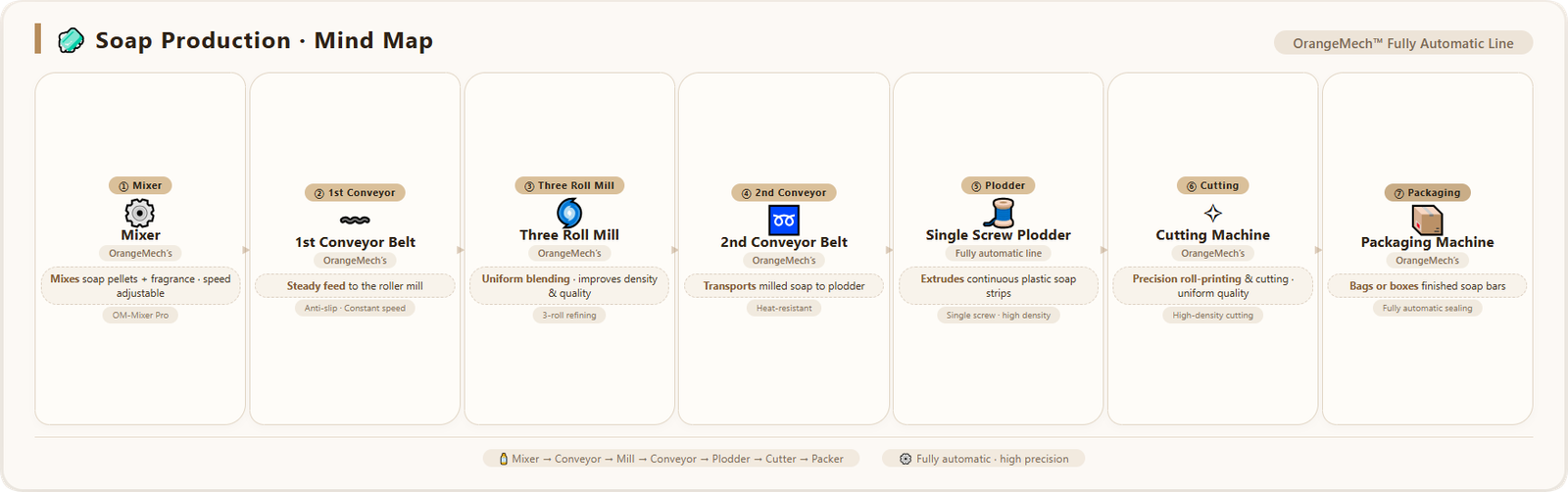
1. Raw Material Preparation: Mixing Machine
The batch blending mixer is a dedicated front-end batching unit for laundry soap production, designed for sequential precision dosing of raw materials, including soap granules, fragrance compounds, colorants, and other auxiliary additives. It adopts a screw-type agitation assembly, performing staged speed mixing for 15 to 30 minutes under a tightly controlled temperature range of 40°C to 60°C. Its low-speed homogenization phase fully eliminates material agglomerates while ensuring uniform color distribution and consistent fragrance dispersion across the entire batch. After mixing, the soap stock with stabilized moisture content and temperature is conveyed to the soap refining machine, providing a homogeneous feed billet for the subsequent refining processes.
2. Precision Refining: Soap Refiner
The soap refining machine is a core intermediate processing unit in the laundry soap production line, engineered to perform extrusion, homogenization, and in-line vacuum deaeration on pre-blended soap stock. It utilizes screw-generated high shear force to break down residual solid particles and removes unwanted impurities via built-in precision filter screens. Operating within a tightly controlled vacuum atmosphere of -0.06 to -0.09 MPa, it effectively extracts trapped air from the material to eliminate microvoids and significantly boosts the compactness and plasticity of the soap billet. Tight temperature regulation of 35°C to 45°C is maintained throughout the entire processing cycle, delivering a high-quality soap billet with a fine, compact texture, completely free of voids and impurities. The finished billet is then conveyed directly to the three-roll mill for further precision processing.
3. Ultra-Fine Processing: Three-Roll Mill
The three-roll refining mill, a core precision processing unit in laundry soap production, operates via differential relative rotation of three high-hardness precision-polished rollers at varying speeds. This generates high-intensity shearing force, compressive compaction, and precision refining action on the soap base, reducing solid particles within the material to the specified target fineness. With progressive step-down adjustment of the inter-roller gap, tight temperature regulation is maintained within 35°C and 50°C throughout the process; after 2 to 3 cycles of closed-loop recirculation milling, residual agglomerates and coarse particles are completely eliminated, resulting in a soap billet with an ultra-fine homogeneous structure and enhanced compact density. The post-milling soap billet presents a completely grain-free, smooth texture, which serves as high-quality feedstock for the subsequent refining and bar extrusion processes and directly elevates the surface gloss finish and dense, creamy lathering performance of the final finished soap products.
4. Uniform Soap Extrusion: Vacuum Plodder
The vacuum soap bar extruder, a critical final forming unit in the laundry soap production line, processes pre-refined soap billets within a tightly maintained vacuum atmosphere of -0.07 to -0.09 MPa, delivering continuous extrusion of smooth, ultra-dense soap bars through screw-driven high-pressure compaction and precision die head calibration & forming. Throughout the entire processing cycle, material temperature is strictly regulated between 35℃ and 45℃, with screw rotation speed infinitely adjustable via an integrated variable frequency drive (VFD) system. The high-vacuum environment thoroughly extracts trapped air and microvoids from the soap matrix, completely eliminating common forming defects, including internal lamination, surface pitting, and edge cracking of extruded bars. The final output features consistent dimensional accuracy and a high-gloss surface finish and is directly fed into the subsequent cutting and pattern-stamping processes, ensuring finished soap products have a neat, uniform appearance, qualified hardness, and stable batch-to-batch forming consistency.
5. Efficient Cooling: Cooling System
The cooling system adopts graded and segmented temperature control to uniformly lower the temperature and stabilize the hot soap bars extruded from the vacuum plodder. The temperature is gradually reduced and then slightly raised to prevent cracking caused by rapid cooling. The internal circulating air duct provides gentle air distribution without direct blowing or drying marks, allowing the soap bars to harden quickly while maintaining stable dimensions. The soap bars stay in the cooling tunnel for approximately 20 to 30 minutes. After cooling, they reach the required hardness with no deformation or cracking and are then transferred to the cutting and stamping processes.
6. Continuous Finished Product Output: Soap Cutter
The cutting machine receives continuous soap bars after cooling and setting and uses a servo system to realize precise fixed-length, fixed-weight, and high-speed cutting. The soap bars are fed steadily by conveying rollers, and the cutter can be set to cut accurately at specified dimensions, resulting in high cutting precision and smooth cut surfaces. The machine speed is automatically synchronized with the front-end extrusion and back-end stamping processes, ensuring consistent weight, uniform specifications, and freedom from burrs or deformation for each soap piece. The cut soap pieces can be printed by the stamping machine, guaranteeing a neat appearance and high qualification rate of the final products.
四. Core parameters of the laundry soap production line
The following are the core parameters of each machine in the soap production line. From comprehensive parameters to prices, they have all been listed for you one by one, enabling you to have a deeper understanding of the machines.
| Model | Hybrid mixer | Elevator | Refining machine | three-roll grinder | Vacuum extrusion machine | cooling-water machine | slabbing machine |
| Voltage | 380V, 50Hz | 380V, 50Hz | 380V, 50Hz | 380V, 50Hz | 380V, 50Hz | 220V 50 Hz | 220V 50 Hz |
| Power | 4 kW | 1.5 kW | 7.5kw | 4 kW | 3.7kw | 2.1 kW | 1 kW |
| Yield | 75kg/batch | / | 300kg/h | 300kg/h | 300kg/h | / | 1000–3600 pcs/h |
| Boundary dimension | 13007001200 mm | 4000500500 mm | 180011001600 mm | 9009001350 mm | 1800×1500×1700mm | 1000800850 mm | 10008001350 mm |
| Net weight | 230kg | 200kg | 425 kg | 300 kg | 1,700 kg | 75 kg | 175 kg |
五. Daily maintenance of the laundry soap production line
1. Preparation Before Startup
Before starting production, it is necessary to conduct a comprehensive inspection of the machine: check whether the power cord and control line are loose; Electrical components, sensors, and display screens are normal, and there is no alarm. The emergency stop button is closed; Check that there is no leakage or blockage in each pipeline, the valve switch is normal, the delivery pump and air compressor work normally, and the pressure reaches the standard. Confirm that the interior of the mixing tank, grinder, and layering machine is clean and free of residue; that the mixing and grinding rollers and screws are free of wear and deformation; and that the conveyor belt, mold, and cutter are installed in place. After confirming that there is no abnormality, adjust the parameters suitable for production for each machine.
2. Maintenance during operation
During the operation of the equipment, it is necessary to arrange personnel to monitor the whole process in real time, so as to find and deal with the abnormal situation in operation in time: monitor the operating parameters such as temperature, pressure, rotation speed and flow rate of each equipment in real time to ensure that the parameters are always within the set range; Monitor the material status of each process in real time, and adjust the process parameters immediately if the material quality is poor. Monitor the running sound and vibration of the equipment in real time. If abnormal conditions such as abnormal sound, severe vibration, and excessive temperature occur, stop the machine immediately for inspection and troubleshooting. Adjust the cooling temperature, extrusion speed, and other parameters in time according to the actual situation in the production process to ensure the stability of production. At the same time, clean up the spilled materials on the surface of the equipment in time to avoid the failure caused by the materials entering the equipment.
3. Maintenance after powering off
After each production, comprehensive cleaning and maintenance must be carried out: stop feeding first and turn off the equipment, main power supply, gas source, and water source according to the regulations after the materials are emptied. After the equipment is cooled to normal temperature, remove the conveyor belt, hopper, mold, cutter, filter screen, and other components; clean them with warm water and dry them. Thoroughly wash the non-detachable parts and pipelines such as the tank, grinding roller, and cavity with a high-pressure air gun to remove residues; add lubricating oil to moving parts such as bearings; and reinforce electrical wiring. Finally, restore the initial state of the equipment, clean up the site, and prepare for the next production.
六. Summary
Soap-making machines in China are deeply favored by customers at home and abroad for their excellent workmanship and excellent quality. Orange Mech is an excellent soap-making machine manufacturer, which is committed to creating the most suitable and cost-effective machinery for customers. This laundry soap production line is fully automatic, with only manual front-end feeding and back-end manual collection and packaging, and no manual operation is needed throughout, which saves you more labor costs and helps you to step up in the daily chemical industry.